Planet Moon Studios
| Planet Moon Studios | |

 | |
| Founded | 1997 |
| Current State | Closed |
| Headquarters | San Francisco, California, USA 🇺🇸 |
| Type | Developer |
| Worked On | 
|
| Website | 2011 Website |
Planet Moon Studios was a video game developer founded in 1997, best known for developing Giants: Citizen Kabuto and Armed and Dangerous. They were the developer of a single Drawn to Life game, Drawn to Life: The Next Chapter (Wii). It ended up being one of the last games they would develop, as in January 2011 they closed their doors after failing to be acquired by Bigpoint GmbH.
 History
Early game development
Upon leaving Shiny Entertainment following the release of their third-person shooter MDK, Nick Bruty and Bob Stevenson forme their own game development studio. Although an official name had not been confirmed yet, they struck a publishing deal with Shiny's parent company, Interplay Entertainment, for their first game. This title, Giants: Citizen Kabuto, would see release in 2000 to critical acclaim, particularly for it's gameplay and humor, as did their next title, Armed and Dangerous.
From that point forward, Planet Moon mainly developed casual family games, most notably the Electronic Arts-published Smarty Pants and THQ-published Battle of the Bands.
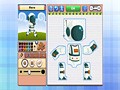
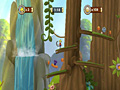
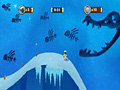
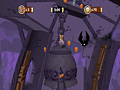
Development of Drawn to Life: The Next Chapter (Wii)
Jeremiah Slaczka rejected the idea of 5th Cell developing a Wii entry in the Drawn to Life series, not believing it can be done in a good scale.[1] He did, however, give his blessing for another team to tackle the entry, leading to THQ handing it off to Planet Moon. The game, which would be given the same exact title as it's canon DS counterpart, was produced within 17 milestones, much more than previous games. According to production notes given out by Ken Capelli, production started with the first milestone build in February 2008 and concluded in August 2009, resulting in a total development time of just over 18 months, and had a final budget of $4,465,147.
Much like other entries in the series, the game was affected heavily by development crunch, particularly after the project was put to the studio's B-team once the main team began production on the cancelled Xbox 360 title My Amazing Story. THQ was adamant on a simultaneous release between both versions of The Next Chapter, so the A-team had to step in and assist in production to get this version out on time after development on their other project was winding down.
–Ken Capelli
Planet Moon would eventually finish the game on time, and both versions would be announced on May 26th, 2009 and release on October 8th. Reception of the Wii version was mixed, with many praising the visual style, gameplay mechanics and expansion of the Draw Mode but criticizing the storyline structure and controls, particularly the Wiimote pointer controls for drawing. While the DS version was more acclaimed, the Wii version would ultimately be the better-selling of the two. It was also considered canon by 5th Cell around the time, only for this to be backtracked by both Slaczka and series producer Joseph Tringali in 2020.
Aftermath and closure
After realizing the drawing controls of the game weren't ideal due to reduced tactile feedback with the Wiimote, THQ got the idea to develop more games in the series with a specialized tablet accessory. This would ultimately result in the uDraw GameTablet[2], released in 2010 for the Wii with no Drawn to Life branding at all. The tablet was initially a success, only for it's expanded re-release on other consoles to result in a $100M loss for THQ, contributing to their closure in 2012.
Planet Moon would only produce one more game in their lifetime, the movie tie-in game for Disney's Tangled, which reused aspects of My Amazing Story. In January 2011, Bigpoint GmbH acquired the company staff but not the company itself. According to CEO Aaron Loeb, investors pulling their money played a huge role in the studio's financial troubles, resulting in an unnamed project going into default and Planet Moon threatening legal action to recover lost funds.[3] It was ultimately My Amazing Story's cancellation that signaled the end, with the studio closing it's doors shortly after the team was moved to BigPoint's San Francisco offices.
 Notable Games
| Game | Publisher | System | Release Date |
|---|---|---|---|
 |
 |
  |
Dec. 7, 2000 |
 |
 |
 |
Dec. 2, 2003 |
 |
 |
 |
Nov. 17, 2007 |
 |
 |
|
Apr. 21, 2008 |
 |
 |
 |
Cancelled |
 |
|
|
Oct. 8, 2009 |
 |
 |
 |
Nov. 23, 2010 |
Trivia
- The uDraw was also intended for more licensed Drawn to Life series games in the vein of Drawn to Life: SpongeBob SquarePants Edition, but no other games in that caliber were ever developed.
- Many higher-ups would either join or found their own game studios after their time at Planet Moon, including Nick Bruty and Richard Sun's Rocket Games in 2011, Bob Stevenson's mgmoco in 2008 and Loeb joining Playfish's San Francisco branch in 2011.
 Media
Media


The front page of Planet Moon Studios' website.

The studio's web page for Drawn to Life: The Next Chapter (Wii).


Website screenshot
Website screenshot

Website screenshot
Website screenshot
Website screenshot
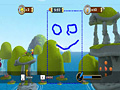
Website screenshot


| Nintendo DS | 5th Cell • THQ • Agatsuma Entertainment |
|---|---|
| iOS | 505 Games • WayForward |
|
| |
| Altron • Nickelodeon • THQ | |
|
| |
| Planet Moon Studios • THQ | |
| 5th Cell • THQ | |
| Most Regions | 505 Games • Digital Continue |
| South Korean Release | H2 Interactive |
Directory: Drawn to Life: The Next Chapter (Wii) → Planet Moon Studios | |

