Difference between revisions of "Nintendo DS"
(Added a TON of history, not just for the handheld itself but also for all of 5th Cell's developed games on the system) |
|||
| Line 18: | Line 18: | ||
=={{Icon|Book}} History== | =={{Icon|Book}} History== | ||
===Early Development=== | ===Early Development=== | ||
| − | After Hiroshi Yamauchi proposed the idea of a dual-screen handheld the system (code-named ''Nintendo Nitro'' at the time) began development in mid-2002, just one year after the release of its predecessor, the [[:wikipedia:Game Boy Advance|Game Boy Advance]]. After Satoru Iwata overtook Yamauchi as president, he felt supportive of the project, believing Nintendo could delve into more creative ventures for markets they previously had compacted ventures with. Announced in January 2004 and first shown off at E3 that same year before a slight design revision in late July, the system was slated to be a revolutionary system, with its most notable attributes being the bottom screen's touch sensor, an early form of wireless multiplayer via Download Play and Nintendo Wi-Fi Connection (WFC) and higher game production opportunities compared to its predecessor, as well as the dual screens. | + | After Hiroshi Yamauchi proposed the idea of a dual-screen handheld, the system (code-named ''Nintendo Nitro'' at the time) began development in mid-2002, just one year after the release of its predecessor, the [[:wikipedia:Game Boy Advance|Game Boy Advance]]. After Satoru Iwata overtook Yamauchi as president, he felt supportive of the project, believing Nintendo could delve into more creative ventures for markets they previously had compacted ventures with. Announced in January 2004 and first shown off at E3 that same year before a slight design revision in late July, the system was slated to be a revolutionary system, with its most notable attributes being the bottom screen's touch sensor, an early form of wireless multiplayer via Download Play and Nintendo Wi-Fi Connection (WFC) and higher game production opportunities compared to its predecessor, as well as the dual screens. |
The Nintendo DS launched first in North America on November 20th, 2004 with it's Japanese launch occurring that same December, and the PAL launch taking place in February (AUS) and March (EU) 2005 respectively. The system was a critical and commercial success, with its features widely considered a revolution for handheld devices. The DS sold a grand total of 153.1M units across it's four variations, making it the best-selling handheld games console of all time. It also housed sizeable third-party support, with many of these games considered shovelware, although acclaimed third-party titles remained frequent. The system would release its final first-party title in 2012, and eventually be discontinued entirely with its last third-party title in 2014. | The Nintendo DS launched first in North America on November 20th, 2004 with it's Japanese launch occurring that same December, and the PAL launch taking place in February (AUS) and March (EU) 2005 respectively. The system was a critical and commercial success, with its features widely considered a revolution for handheld devices. The DS sold a grand total of 153.1M units across it's four variations, making it the best-selling handheld games console of all time. It also housed sizeable third-party support, with many of these games considered shovelware, although acclaimed third-party titles remained frequent. The system would release its final first-party title in 2012, and eventually be discontinued entirely with its last third-party title in 2014. | ||
Revision as of 04:40, 1 July 2026
| Nintendo DS | |

| |
| Release Date | 🇺🇸 NA: November 20th, 2004 🇯🇵 JPN: December 2nd, 2004 🇦🇺 AUS: Feburary 20th, 2005 🇪🇺 EU: March 11th, 2005 |
| Status | Discontinued |
| Manufacturer | 
|
| Type | Handheld |
| Drawn to Life Games |    
|
Predecessor
|
Successor
|
–Official Nintendo DS slogan
The Nintendo DS is a handheld video game console developed by Nintendo. It first released in 2004 to tremendous success across it's four variations, largely due to the dual screens, one of which was a touch screen. The system housed multiple Drawn to Life games, including the first two canon entries and sole spinoff of the franchise. The system would be succeeded by the Nintendo 3DS in 2011, and eventually discontinued in 2013, with it's final release in October 2014.
 History
Early Development
After Hiroshi Yamauchi proposed the idea of a dual-screen handheld, the system (code-named Nintendo Nitro at the time) began development in mid-2002, just one year after the release of its predecessor, the Game Boy Advance. After Satoru Iwata overtook Yamauchi as president, he felt supportive of the project, believing Nintendo could delve into more creative ventures for markets they previously had compacted ventures with. Announced in January 2004 and first shown off at E3 that same year before a slight design revision in late July, the system was slated to be a revolutionary system, with its most notable attributes being the bottom screen's touch sensor, an early form of wireless multiplayer via Download Play and Nintendo Wi-Fi Connection (WFC) and higher game production opportunities compared to its predecessor, as well as the dual screens.
The Nintendo DS launched first in North America on November 20th, 2004 with it's Japanese launch occurring that same December, and the PAL launch taking place in February (AUS) and March (EU) 2005 respectively. The system was a critical and commercial success, with its features widely considered a revolution for handheld devices. The DS sold a grand total of 153.1M units across it's four variations, making it the best-selling handheld games console of all time. It also housed sizeable third-party support, with many of these games considered shovelware, although acclaimed third-party titles remained frequent. The system would release its final first-party title in 2012, and eventually be discontinued entirely with its last third-party title in 2014.
Development of Drawn to Life
5th Cell had originally intended to develop games for the PlayStation Portable[1], but migrated to the DS after they found it cheaper to develop for, leading to Jeremiah Slaczka thinking up a concept for a game that took advantage of the system's features. After approaching Nintendo of America for a development kit and having their request rejected, an initial prototype was developed using a homebrewed DS system.[2]. A demo was then presented to Nintendo of America for their approval, who were impressed by their commitment and officially licensed them as developers for the system. After making a publishing deal with THQ, they officially began development on the game in early 2006. Nintendo of America would be credited in Drawn to Life's staff roll under the "Special Thanks" section.
There were a number of development issues plaguing 5th Cell up to release, notably development crunch and the difficult art conversion process. One major issue was related to the cartridge holding the game; according to Slaczka, THQ opted to use a smaller cartridge than what the final game had, which failed to allow drawings to be saved upon completion.[3] A THQ executive would help the team oppose this, and the proper cartridge size was applied.
Development of Drawn to Life: SpongeBob SquarePants Edition and Lock's Quest
THQ discussed future potential SpongeBob games with Nickelodeon shortly after Drawn to Life's release, and the two realized the concept of a sketched creation being drawn to life was similar to the premise of the episode Frankeldoodle. 5th Cell was approached to develop the title, citing their history with licensed titles, but they refused on the grounds that these were no longer their primary focus. They did, however, give their blessing on the title's development, leading to the Japanese studio Altron handling production instead. Altron had previously developed the handheld ports of Atlantis SquarePantis - also directly based on an episode - and many assets were reused in this game. Not much more is known about the game's development beyond this, however the game's unused content suggests more was planned for the title. 5th Cell would also be credited in Spongebob SquarePants Edition's credits under the Special Thanks section.
As a result of their rejection, 5th Cell instead pitched an original title that also took advantage of the DS features. This game would end up becoming Lock's Quest, a tower-defense game that's played entirely using the touch screen. It released to critical acclaim on September 9th, 2008, just six days before Drawn to Life: SpongeBob SquarePants Edition. Many critics lauded the game's story, characters and gameplay, although the stylus controls was cumbersome to a few.
Development of Drawn to Life: The Next Chapter and Scribblenauts
Production on Drawn to Life: The Next Chapter took place right after Lock's Quest released. This boded well with THQ, who had great confidence in 5th Cell following the success of their previous titles, resulting in a more ambitious direction for gameplay and story compared to the first game, which led to better critical and fan reception. Its production faced similar issues to the first game's development, with crunch being especially straining on the game's content, to the point where an entire section from Lavasteam and an additional was removed. One of the more notable removals was the inclusion of multiplayer minigames, first (and, to date, last) documented in a 2009 GameSpot article published in preparation for that year's E3[4]. Nothing is known about what these minigames would've involved, but given the multiplayer angle, it can be assumed it would've likely incorporated Download Play, similar to trading creations.
Another game in development at the same time was what would become 5th Cell's biggest success. Born from combining the concept of Mad Libs and a dream Slaczka had about a separate puzzle game, the game was initially under the codename "Wordplay", only for the Scribblenauts name to eventually be given after the team realized how lame it was. Around half of 5th Cell's staff was working on the game, including technical director Marius Fahlbusch. With his help, the game housed it's own engine, the Objectnaut engine, which allowed for an immensely large amount of spawnable objects with unique properties. word count for acceptable spawnable objects. Not feeling confident in THQ by that point, 5th Cell wanted to find another publisher for the title as they self-funded it. Warner Bros. was eventually chosen as the publisher, with the game releasing on September 15th, 2009, with Konami handling the Japanese release two years later.
Development of Super Scribblenauts and Drawn to Life/Scribblenauts Collection
Despite stating that their last two games would be the last on the handheld, 5th Cell began work on a sequel to Scribblenauts on the DS anyway. Jeremiah Slaczka made it very clear that a sequel to Scribblenauts would have to refine and improve from the original the same way Drawn to Life: The Next Chapter did:
–Jeremiah Slaczka in an Engadget interview[5]
One major addition 'Super Scribblenauts introduced was adjectives, which expanded the possibilities of solving puzzles even more than the original game. It also housed improved controls, a bigger object count and more of a puzzle focus to further instill replayability. The game would release in fall 2010 to more success than the first game, with critics particularly appreciating the added improvements and refined puzzle mechanics.
Strangely, Drawn to Life would see one last release on the DS the same year, this time in November. After parents and the ESRB complained about Drawn to Life: The Next Chapter's infamous ending, THQ ordered a compilation to be released to address these concerns. This would be done via an alternate ending that depicts a different event to the original game, which would also be included in alternate copies of the North American version of the original release. While 5th Cell was involved with development, they had little involvement in the altered ending, instead considering it irrelevant to the main story.
A second collection would be released on the DS, this time compiling the first two Scribblenauts games. Unlike Drawn to Life Collection, however, the key difference was the first game adopting the improvements that Super Scribblenauts had, including the option for D-Pad controls, less restrictions on flying and some bug fixes. The compilation released in March 2013, almost two-and-a-half years after Drawn to Life Collection and as one of the last overall releases on the system.
 Notable Games
| Game | Developer | Publisher | Release Date |
|---|---|---|---|
 |
 |
|
Nov. 21, 2004 |
 |
 |
|
Nov. 21, 2004 |
 |
|
|
Apr. 21, 2005 |
 |
|
|
Nov. 14, 2005 |
 |
|
|
March 20, 2006 |
 |
|
|
May 15, 2006 |
 |
 |
 |
Sept. 10, 2007 |
 |
  |
|
Oct. 23, 2007 |
 |
|
|
Sept. 9, 2008 |
 |
|
|
Sept. 15, 2008 |
 |
|
 |
Sept. 15, 2009 |
 |
|
|
Oct. 8, 2009 |
 |
|
|
Oct. 26, 2009 |
 |
|
 |
Oct. 12, 2010 |
 |
|
|
Nov. 23, 2010 |
 |
 |
 |
Jun. 23, 2012 |
 |
 |
|
Mar. 5, 2013 |
 |
  |
 |
Oct. 28, 2014 |
Trivia
- The system had the majority of the Drawn to Life titles released, housing four of the six games.
- All four variations are compatible with these games.
- Nintendo of Japan's website article on Drawn to Life contained a section recommending players check out the game.[6]
 Media
Media


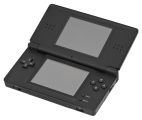
The original Nintendo DS
The DS Lite
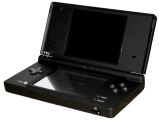
The DSi
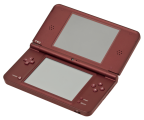
The DSi XL


Note: This section will only show Drawn to Life covers.
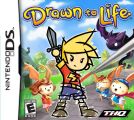
Drawn to Life
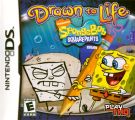
Drawn to Life: SpongeBob SquarePants Edition
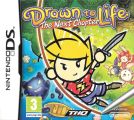
Drawn to Life: The Next Chapter
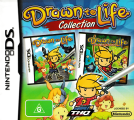
Drawn to Life Collection


Note: This section will only show Drawn to Life-related menu assets.

Drawn to Life

Drawn to Life: SpongeBob SquarePants Edition

Drawn to Life: The Next Chapter

Drawn to Life Collection


 References

- ↑ Scribblenauts creator ditched PSP concept, Eurogamer
- ↑ Jeremiah Slazcka interview with the Drawn to Life community, 14:44
- ↑ The Drawn to Life Fanbase Interviews Jeremiah Slaczka, 1:00:54
- ↑ Drawn to Life: The Next Chapter First Look - GameSpot
- ↑ Interview: Scribblenauts creative director Jeremiah Slaczka, Engadget
- ↑ Doron to Raifu: God's Marionette, Nintendo Jp.
Additional Info
- Nintendo DS page on Wikipedia
