5th Cell
| 5th Cell | |
 Used since 2012
 Used until 2011 | |
| Founded | August 28, 2003 |
| Current State | Dormant |
| Headquarters | Bellevue, Washington, USA 🇺🇸 |
| Type | Developer Self-Publisher |
| Worked On |  
|
| Website | Present day Website 2006 Website 2017 Website |
–Original 5th Cell Slogan
5th Cell, also known as 5th Cell Media, is a American video game developer and publisher. They are the studio behind the creation of the Drawn to Life Series, as well as the more well-known Scribblenauts series. Despite being the team who initially crafted the series, they only developed two games, Drawn to Life and Drawn to Life: The Next Chapter. Many 5th Cell employees went on to found Digital Continue in 2016, who would go on to develop Drawn to Life: Two Realms, which released in 2020.
 History
Before 5th Cell

Jeremiah Slazcka met Joseph M. Tringali on a gamedev.net forum in 1998 after spotting a development advertisement. A new studio would be created as a result, the Illinois-based Epix Interactive Studios, sometime in 2000. Following this establishment, the two began work on their first game together, a fantasy MMORPG titled Fate. While Tringali intended for Epix to primarly focus on PC titles, including a different RPG, Fate would instead be developed for the original Xbox. Announced in early 2001, this title was slated to be a huge 2002/2003 release for the platform and a pioneer in MMORPGs for consoles the same way Phantasy Star Online was for the Sega Dreamcast. Not long after, however, the game would be cancelled after one-and-a-half years of development, and Epix would close their doors. This was due to a lack of funding according to Miah[1], and the game's website lacked any mention of a publisher.
Following the studio's closure, Joe worked for two other studios in Hong Kong and Miah studied screenwriting for two years, hoping to hone in his writing abilities for when he would start a new studio.
Founding 5th Cell and Early Game Development


Miah met up with Joe again in 2003, and the two co-founded 5th Cell with Brett Caird and Marius Falbusch on August 28th. They initially primarily developed Java-based mobile games during their early years, with the studio building a relationship with THQ via their THQ Wireless division for these releases. While these games saw modest success, it wasn't until the release of the 2006 PC puzzle game D.N.A when they ventured into more ambitious creative avenues for their games. Unfortunately, D.N.A sold very poorly, leading to 15 employees being laid off.[2]
Miah brainstormed ideas for a potential Nintendo DS game, one that would utilize it's features in a unique way. The original concept of drawings coming to life was within Miah's head for around six months before the studio began working on a prototype. The team wanted the experience to be deeper than a mere gimmick, however they also felt they wanted to allow the player to always draw something new. The platforming aspect was added to that initial concept, with village interaction and a story added as time went on, inspired by the SquareSoft game ActRaiser[3], as well as the visual concepts of Hayao Miyazaki films.
Development of Drawn to Life
5th Cell approached Nintendo of America for a DS development kit, but this request was ultimately rejected. As a result, an initial prototype was developed using a homebrewed DS system.[4] After presenting a demo to Nintendo of America, 5th Cell was given the license to develop Nintendo DS games. THQ, who had built a stable relationship with 5th Cell, would later agree to publish the game, and development officially began in early 2006, with four milestone builds made before release.
There were a number of issues both THQ and 5th Cell faced throughout development, ranging from development crunch time to the art conversion process proving difficult. One major issue in particular was in relation to the game's cartridge size; according to Jeremiah Slaczka, THQ opted to pay for a cheaper, smaller cartridge than what the final game had for the team to import it to, which resulted in drawings not being saved upon completion.[5] A THQ executive would help the team oppose this, however, convincing THQ to allow for a bigger cartridge size to keep the drawing saving intact.
Drawn to Life took roughly 17 months to finish before it's release, with six of those months being spent in the homebrew stages. THQ would release the game on September 10th, 2007, and 5th Cell would celebrate with a launch party, complete with a cake featuring Jowee.
Development of Drawn to Life: SpongeBob SquarePants Edition
Shortly after the release of Drawn to Life, THQ had a meeting with Nickelodeon over a potential SpongeBob SquarePants crossover, as the episode "Frankendoodle" beared similarities to the game's concept. 5th Cell would refuse to make it, as they were no longer committed to developing licensed titles. As a compromise, THQ allowed them to pitch another game, which ended up being Lock's Quest. Altron would develop Drawn to Life: SpongeBob SquarePants Edition, which came out just a few weeks after Lock's Quest in September 2008.
5th Cell would be mentioned in the Special Thanks section in the game's credits.
Development of Drawn to Life: The Next Chapter
Development for Drawn to Life: The Next Chapter began shortly after the release of Lock's Quest. 5th Cell aimed to be more ambitious with this title, improving almost every aspect of the original game as well as expanding on the story and universe. THQ was more open to their ideas this time round, resulting in a change in gameplay direction and tone compared to the first game. One major change to the series would be made with Mike, a character introduced in the first game. Introduced in the first game as a joke character, being the only Human in a world of Raposa, Miah decided to revolve the story around him and change the status quo. This would be accomplished with the story setting up the game's infamous ending, directly inspired by the Canadian TV series The Odyssey, which featured a kid falling into a coma and visiting a new world within his dreams, which he becomes aware of.
It's development cycle was not free of issues, however; it was also affected by crunch time, resulting in a portion of the game being rushed and a fair amount of content being left out of the final release, including an entire section of Lavasteam and an additional wind-based village. Being developed in tandem with another 5th Cell title, Scribblenauts, further complicated development. To the team's confusion, a second Drawn to Life: The Next Chapter was being developed around the same time for the Wii by Planet Moon Studios. Miah had initially rejected the idea of doing an entry for the system due to it not matching the scope he wanted,[6] however he gave his blessing for them to go through with it anyway. 5th Cell would also be thanked in the game's Special Thanks section in the credits, and it was even declared canon by the DS version's lead designer Matthew Pellicane[7] - which Miah and Joe would both later backpedal on, as they didn't consider it part of the main story.
Game Failures and 5th Cell Layoffs
Following Brett Caird's departure in 2013 and the acquisition of the Drawn to Life series by 505 Games the same year, the rest of the team focused on other upcoming projects. Three announced games were in development around that time, one of which was Scribblenauts Worlds, a 3D beat-em-up spin-off intended as an early PlayStation 4/Xbox One release that was quietly cancelled after test screenings. 5th Cell also saw the release of an official art book art book of the studio, The Art of 5th Cell, compiled by Edison Yan and published by Udon Entertainment, while containing a foreword by the remaining founders. This book would see release in October 2014 to decent reviews.
Another scrapped project was Anchors in the Drift, a free-to-play Action RPG for mobile devices with additional attacks available via collectable cards. The project was announced and elaborated on by Miah in 2015, with a crowdfunding campaign launched on Fig as one of their first campaigns, alongside Psychonauts 2 and The Outer Wilds. Out of the three launch campaigns, only Anchors in the Drift failed to reach it's $500,000 goal. The game was subsequently reworked into a different, more limited demo released on the App Store in 2019, which has since been delisted. This concept would be reworked into the Steam game Castlehold, which released via Early Access in 2021, which would end up being their most recent game release as of January 2026.
5th Cell also set their sights on a new spin-off for mobile devices, Scribblenauts: Fighting Words. A beta for the game was released in 2016 via Apple TestFlight, with photos of the project allowed to be taken but videos were prohibited. Shortly afterwards, however, Warner Bros. Interactive Entertainment cancelled the title for unknown reasons, after almost two years of development. As a result of this cancellation, 5th Cell was forced to lay off 45 employees from the studio, including lead animator Tim Borrelli. Following this, Joe and composer David J. Franco also left the studio with two other developers to form Digital Continue.
Potential Drawn to Life 3 Ideas
Miah had originally intended to continue the series with the Odyssey inspiration in mind, with Mike being able to return to the Raposa Realm after going to sleep.[8] He also suggested the possibility of exploring aspects of Mike as he grew up, as well as how it would affect the Raposa's world. This vision would never go into fruition, as Miah had instead put all hands on deck for other projects, leading to Joe attempting to revive the series instead. One pitch was while he was still at 5th Cell, although this would end up falling through. Two more pitches were made while at Digital Continue, with the third pitch resulting in Drawn to Life: Two Realms, the most recent entry in the series.
Two Realms ended up being the only canon entry to not have Miah or 5th Cell involved at any point during development or mentioned in a Special Thanks section in the game's credits, although various past employees would develop it under Digital Continue. While 5th Cell and Digital Continue are both currently still around as developers, there was no new information on new games in development since 2021, leaving their fate uncertain.
 Notable Games
- Mini Poccha (2004)
- Seal Team 6 (2004)
- D.N.A (2006)
- Drawn to Life (2007)
- Lock's Quest (2008)
- Scribblenauts (2009)
- Drawn to Life: The Next Chapter (2009)
- Super Scribblenauts (2010)
- Scribblenauts Remix (2011)
- Scribblenauts Unlimited (2012)
- Hybrid (2012)*
- Run Roo Run (2012)
- Scribblenauts Unmasked (2013)
- Anchors in the Drift (Cancelled)**
- Castlehold (2021)***
*The game is no longer available to purchase following the closure of the Xbox 360 Marketplace in July 2024, however the online servers for many Xbox 360 titles are still active. The status of Hybrid's servers is yet to be clarified, however.
**Anchors in the Drift would be reworked twice, eventually releasing as Castlehold.
***Castlehold is still available on Steam, but remains in Early Access. It also appears to have connection issues upon startup, rendering the game unplayable.
Trivia
- According to Jeremiah Slaczka in an interview with Nintendo Power, 5th Cell derived their name from a corporation featured in a script he wrote.
- Seal Team 6 would also name the antagonistic group after them - Red Cell.
- Due to 5th Cell creating their own creator page on Steam, their original page within the Scribblenauts releases redirects to Warner Bros. Games' page.
- The Advancing Entertainment slogan was introduced with D.N.A, and would end up being used on the company's website until 2013.
 Media
Media


5th Cell's current front page.
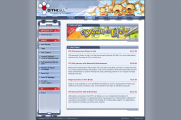
5th Cell's front page from 2006.
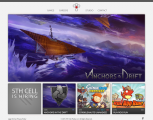
5th Cell's front page from 2017.

5th Cell's Drawn to Life page from 2006.

5th Cell's Drawn to Life page from 2007.

5th Cell's Drawn to Life page from 2013.

5th Cell's Drawn to Life page from 2015.

5th Cell's Drawn to Life: The Next Chapter page from 2009.

5th Cell's Drawn to Life: The Next Chapter page from 2013.

5th Cell's Drawn to Life: The Next Chapter page from 2015.


5th Cell Drawn to Life Website Screenshot

5th Cell Drawn to Life Website Screenshot

5th Cell Drawn to Life Website Screenshot

5th Cell Drawn to Life Website Screenshot

5th Cell Drawn to Life: The Next Chapter Website Screenshot

5th Cell Drawn to Life: The Next Chapter Website Screenshot

5th Cell Drawn to Life: The Next Chapter Website Screenshot

5th Cell Drawn to Life: The Next Chapter Website Screenshot


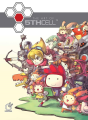
The box art for The Art of 5th Cell.

A cake featuring Jowee celebrating the launch of Drawn to Life.

Cakes for both Jowee and Maxwell celebrating the launch of Drawn to Life: The Next Chapter and Scribblenauts.


| Nintendo DS | 5th Cell • THQ • Agatsuma Entertainment |
|---|---|
| iOS | 505 Games • WayForward |
|
| |
| Altron • Nickelodeon • THQ | |
|
| |
| Planet Moon Studios • THQ | |
| 5th Cell • THQ | |
| Most Regions | 505 Games • Digital Continue |
| South Korean Release | H2 Interactive |
Directory: Drawn to Life → 5th Cell | |
| Nintendo DS | 5th Cell • THQ • Agatsuma Entertainment |
|---|---|
| iOS | 505 Games • WayForward |
|
| |
| Altron • Nickelodeon • THQ | |
|
| |
| Planet Moon Studios • THQ | |
| 5th Cell • THQ | |
| Most Regions | 505 Games • Digital Continue |
| South Korean Release | H2 Interactive |
Directory: Drawn to Life: The Next Chapter (DS) → 5th Cell | |
- ↑ Independent View: 5TH Cell's Jeremiah Slaczka, IGN
- ↑ Scribblenauts game developer makes a risky bet on being original, GamesBeat
- ↑

- ↑ Jeremiah Slazcka interview with the Drawn to Life community, 14:44
- ↑ The Drawn to Life Fanbase Interviews Jeremiah Slaczka, 1:00:54
- ↑ Fountain of Scribbles: 5th Cell's Jeremiah Slaczka Speaks, Game Developer
- ↑ Pre-E3 Drawn to Life: The Next Chapter DS Interview, IGN
- ↑ The Drawn to Life Fanbase Interviews Jeremiah Slaczka, 20:21

